
Quick Read:
- The all-new 2027 Nissan Rogue will bring Nissan’s e-Power hybrid to the U.S., using the gas engine as a generator while electric motors turn the wheels.
- Every Rogue Hybrid will come with all-wheel drive and no conventional transmission, delivering a combined 225 horsepower and an estimated 40 mpg city / 36 mpg highway.
- Sales will begin in fall 2026 with the SR equipped with the SR Technology Package at $41,490 before destination, with the SV, other SR configurations, and Platinum trims to follow in early 2027.
While Nissan has dabbled in hybrid powertrains over the years, even licensing Toyota’s technology, it has never made hybrids a core offering. That’s about to change with the upcoming 2027 Nissan Rogue Hybrid. It’s an electrified crossover that Nissan hopes will tap into a growing hybrid market that now accounts for over 16% of new vehicle sales, according to the U.S. Energy Information Administration.
Nissan Rogue Hybrid Uses Different Technology
Calling this introduction a big deal is an understatement. The Rogue represents about 30% of the automaker’s sales in the U.S. If the company doesn’t get the formula just right, consumers will be happy to buy hybrid compact crossovers from Toyota, Honda, Mazda, Kia, Hyundai, and others. The risk comes from the e-Power technology underpinning the Rogue Hybrid.
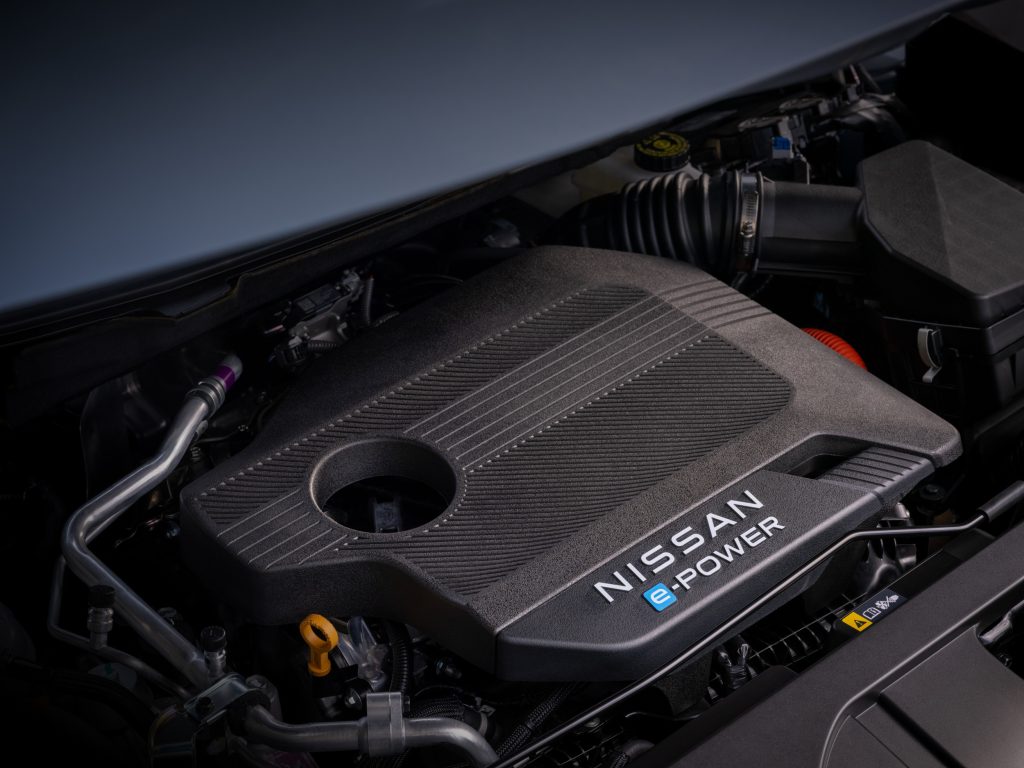
Unlike a typical hybrid, which uses a parallel system where both the gasoline engine and electric motor can drive the wheels, the Rogue Hybrid will use a series system. Only its electric motors will turn the wheels. A turbocharged 1.5-liter gasoline engine will generate electricity to power those motors or charge the battery, shutting off when it isn’t needed. Think of the engine as a generator.
The idea is to deliver the smooth acceleration of an EV while letting owners fill up at a gas station instead of plugging in. Other cars, like the Chevrolet Volt, have used a similar platform, but this is Nissan’s first in the U.S. However, e-Power has been used in almost 2 million Nissans in overseas markets.
No transmission for the 2027 Nissan Rogue Hybrid
The setup means the Rogue Hybrid won’t have a transmission. Instead, electric motors will manage the power sent to the wheels. All Rogue Hybrids will have all-wheel drive. Combined output is expected to be 225 horsepower, and Nissan estimates 40 mpg in the city and 36 mpg on the highway.
Braking will borrow another familiar EV feature. Nissan’s e-Pedal mode will let drivers slow to a complete stop by lifting off the accelerator, with regenerative braking recovering energy for the battery. A separate Smooth Stop feature will adjust brake pressure near the end of a stop to reduce the final jolt occupants sometimes feel. Early driving impressions point to a more refined experience than past models. During a prototype drive, Edmunds reported quiet operation and ample acceleration.
2027 Nissan Rogue Hybrid: All-New, Inside and Out
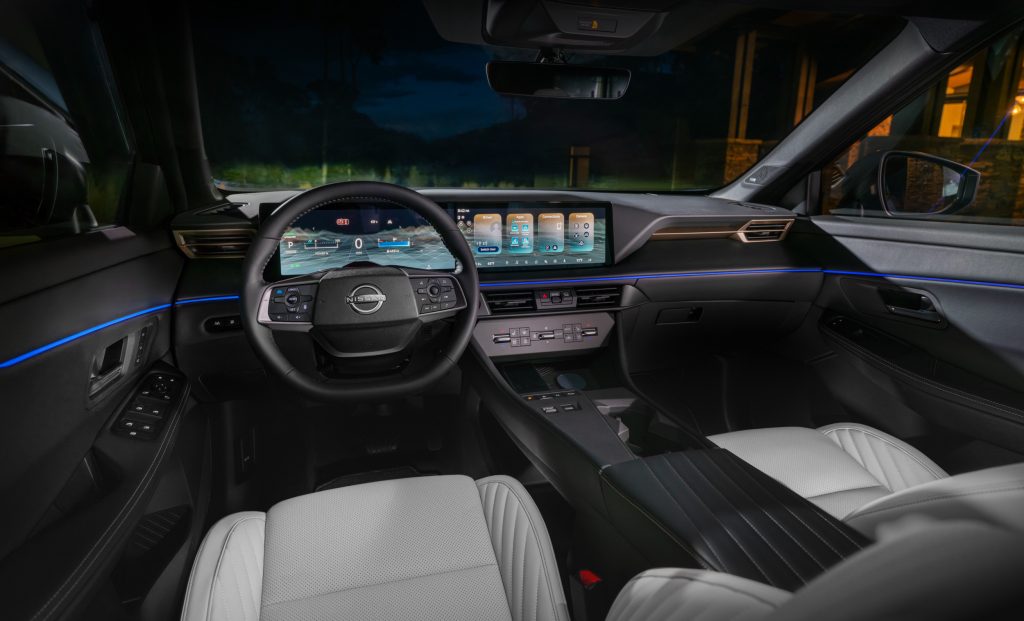
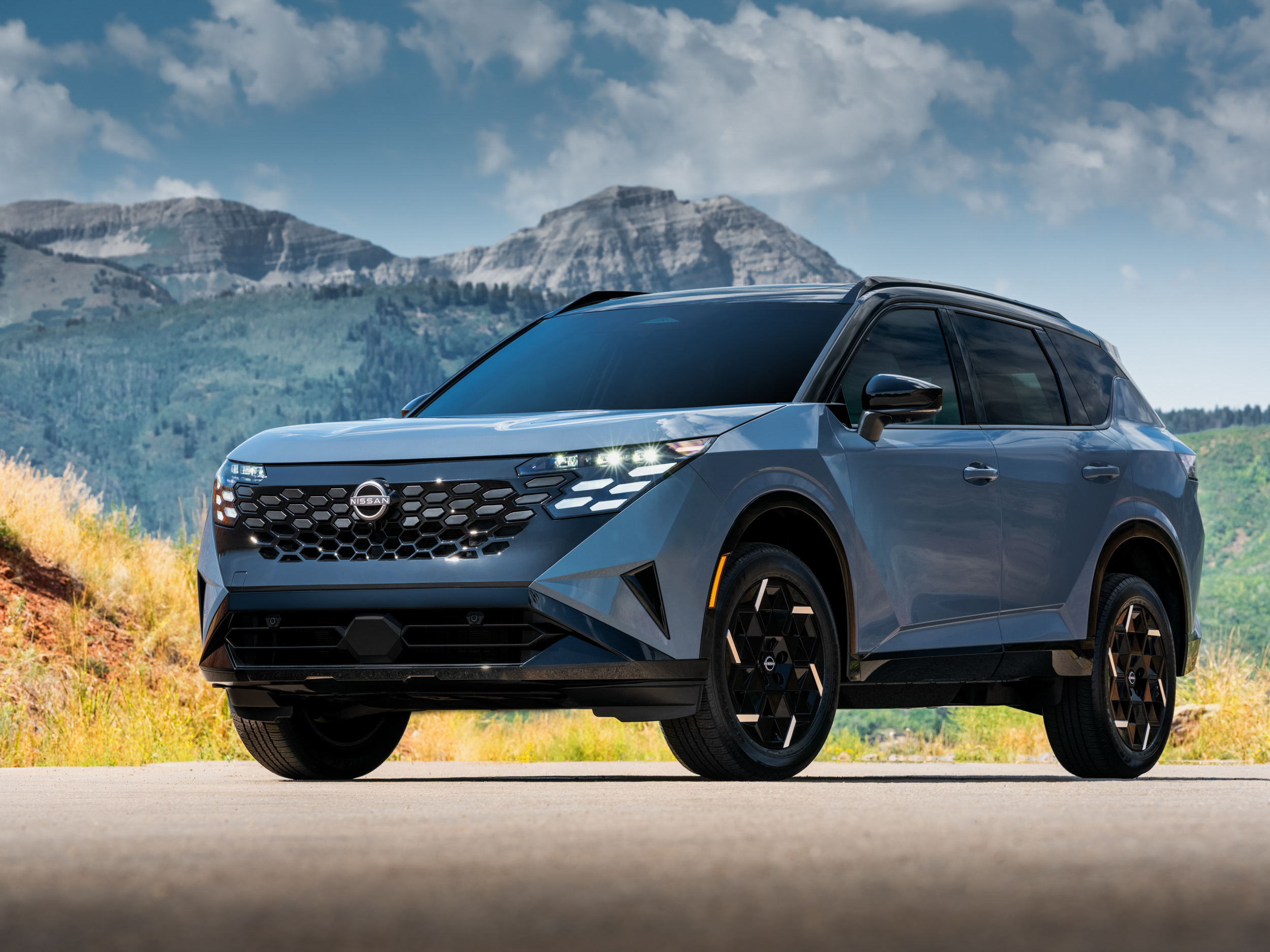
With all the talk of hybrid power, it’s easy to overlook that the new Rogue will be wrapped in all-new sheet metal, featuring a sleek exterior with a multi-lamp front end. The interior is all new, featuring physical climate controls and the obligatory dual-screen dashboard setup for higher trims.
Cargo capacity will measure 31.1 cubic feet behind the rear seats or 65.9 cubic feet with them folded. Rear doors opening nearly 90 degrees will help with loading children and installing car seats.
Sales will launch in fall 2026 with the SR equipped with the SR Technology Package, priced at $41,490 before destination charges. The SV, other SR configurations, and Platinum trims will follow in early 2027. A conventionally powered Rogue is also in the works.
The previous (third) generation, which launched for the 2021 model year, posted mixed CarDependability Index (CDi) scores. The 2021 Rogue is the strongest of the group, with an Early CDi score of 87 out of 100 (Grade: B) and an Average Long-Term CDi of 1.077 complaints per 1,000 vehicles. The 2023 edition is the weakest, with an Early CDi score of 68 out of 100 (Grade: D+) and a Below-average Long-Term CDi of 2.724 complaints per 1,000 vehicles.