
Quick Read:
- The 2017 Camry earns an A on the CarDependability Index; the redesigned 2018 drops to a C.
- 2018 owners report roughly five times as many lifetime complaints as 2017 owners (2.045 vs. 0.414 per 1,000 vehicles).
- The 2018 has eight recalls compared with the 2017’s three, with its worst complaints in the transmission and engine categories.
While SUVs and pickup trucks get much of the attention in today’s car market, sedans are alive and well. In 2025, the Toyota Camry was the best-seller. For those wanting four doors and a trunk, the Camry is a logical choice, but with a starting price over $30,000, a new one doesn’t fit everyone’s budget. Buying used is the obvious alternative, but rushing into any second-hand Camry can be a big mistake.
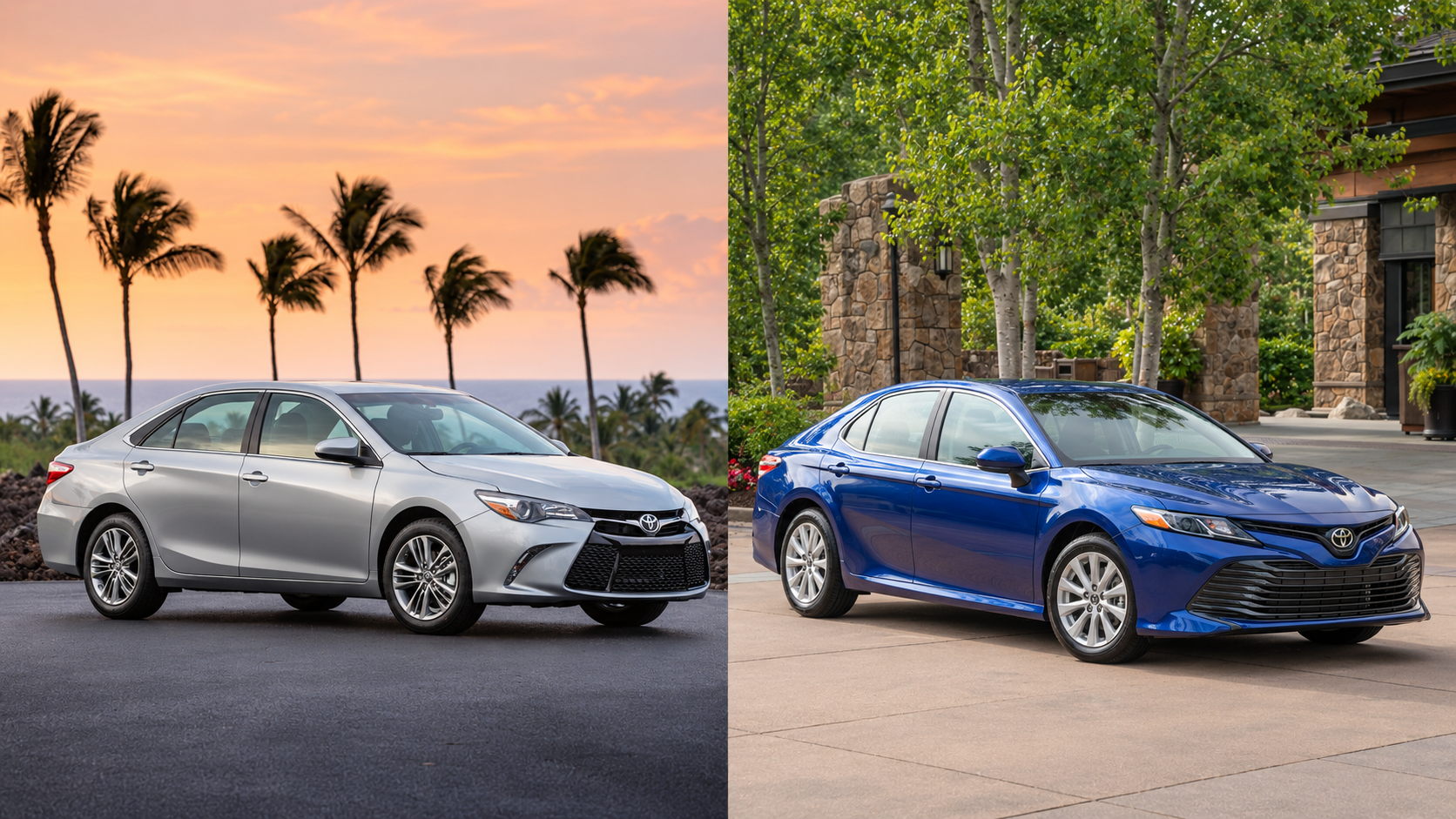
Just one model-year difference can set you on a potential path of either hassle-free ownership or wishing you’d never bought the car. Despite Toyota’s solid reputation for building dependable vehicles, the automaker occasionally gets it wrong. A case in point is the 2017 Camry versus the 2018 Camry. The 2017 edition represents the last model year of the seventh generation (XV50), with proven engineering and most kinks worked out. 2018 marks the debut of the eighth-generation Camry (XV70), featuring a full redesign and reworked powertrains. If you’ve heard the advice to avoid the first year of an all-new model, the 2018 Camry may be one reason why.
To sort it out, we’ll turn to CarDependability’s own data. The CarDependability Index (CDi) is built on real complaints owners filed with federal regulators—not opinion surveys or subscriber panels—and weighs them against how common each vehicle is, so it doesn’t penalize a strong seller simply for being everywhere on the road. Every model year earns an early grade covering its first three years, then a long-term measure that ranks its lifetime complaint volume against other vehicles from the same model year. Because the CDi scores each year on its own, it catches exactly the kind of single-year swing that separates the 2017 Camry from the 2018.
2017 Toyota Camry: A Smart Buy
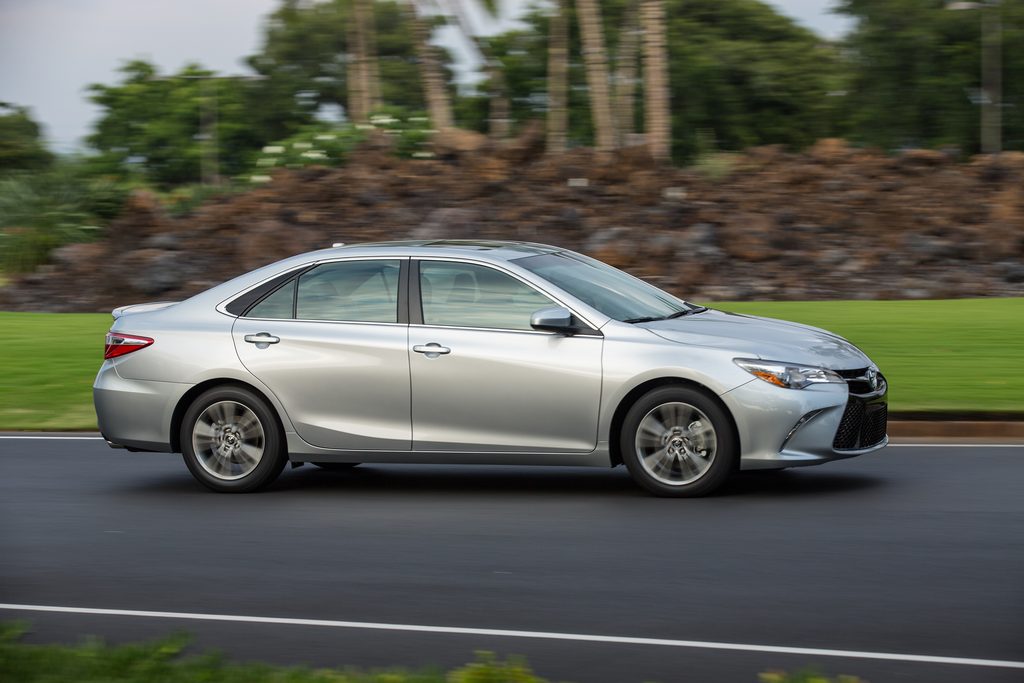
With an average price of $15,081 (CarGurus), the 2017 Camry benefits from continuous improvement in a generation that launched with the 2012 model year. With an Early CDi score of 96 out of 100 (Grade: A), this edition is among the highest-rated Camry model years (ratings go back to 2006) in this area. The Long-Term CDi is also notable: at 0.414 complaints per 1,000 vehicles, the 2017 Camry lands in the Excellent range and the 97th percentile among all 2017 vehicles in our index—meaning it has drawn fewer lifetime complaints than roughly 97% of cars from its model year. Strong on both the early and long-term measures, the 2017 Camry ranks among the safer used bets in the model’s recent history.
Recalls are a fact of life for many modern cars, but they don’t necessarily connect to dependability. Nonetheless, one or more safety campaigns can offer insight into a car’s background. To date, the 2017 Camry has three recalls, including one involving a faulty knee airbag. You’ll see below that the 2018 edition fares much worse.
A look at the complaints shows airbags and restraint systems as the most troublesome category, with some issues linked to the recall. Electrical problems and steering/suspension issues round out the top three complaint areas. Transmission and engine troubles, the most worrisome and expensive-to-repair systems, rank far down the list.
2018 Toyota Camry: A Riskier Bet
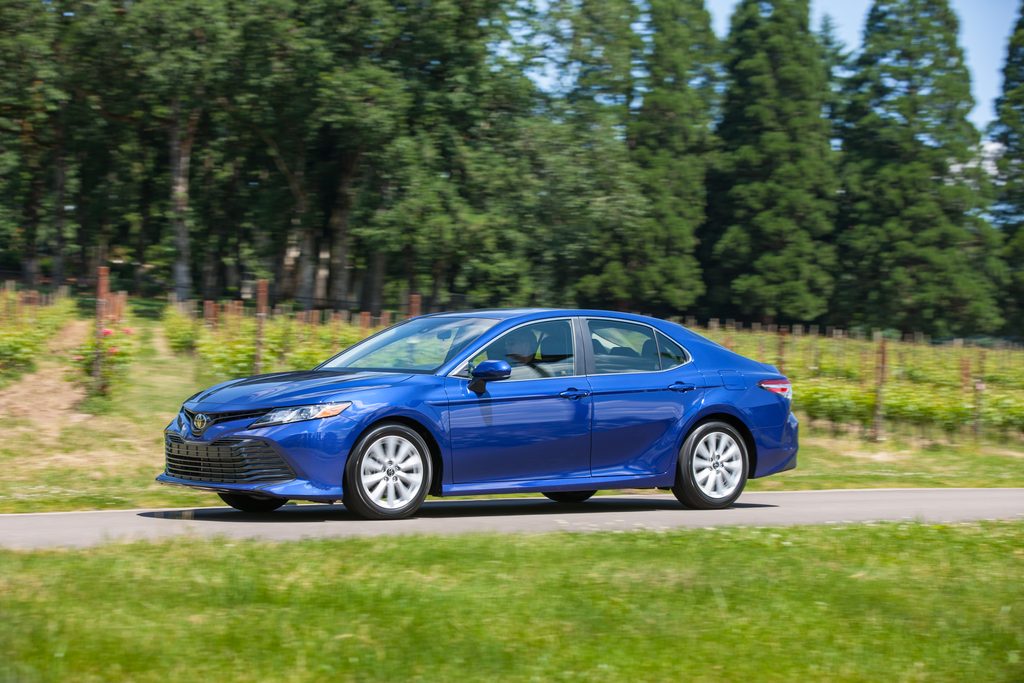
In the car world, one model year can yield a substantial difference. For the Camry, the 2018 edition introduced a sleeker exterior that’s not substantially different from the ninth-generation (XV80) that arrived for 2025. The 2018 model’s base engine, a 2.5-liter four-cylinder unit that also powered the previous generation, was revised to increase horsepower (to 203 from 178). The hybrid and V6 also received retuning and increased output. The 2018 Camry’s new look and added power can be a strong incentive for used car buyers. Plus, an average price of $17,813 is still far less than buying new.
However, these advantages may not seem appealing given an Early CDi score of 75 out of 100 (Grade: C). The Long-Term CDi is equally discouraging, with 2.045 complaints per 1,000 vehicles, about five times the rate of the 2017 Camry. The volume of owner reports pushes the 2018 Camry down to the 39th percentile. In other words, over 60% of all assessed 2018 vehicles received fewer complaints over their lifetimes. Let’s add salt to the wounds by calling out that the 2018 Camry has eight recalls, an unusually high number for a Toyota.
Yet one set of numbers really raises red flags. About one-fourth of all complaints involve the transmission or drivetrain, something that’s quite rare in the Toyota realm. In addition, 18% of owner reports reflected engine issues, another oddity. These statistics should steer used Camry shoppers toward another model year.
Used Camry Buyer Tips
The CarDependability Index is only one tool that shoppers should use when looking at a pre-owned Camry or any vehicle. Start with a vehicle history report to check for unusual ownership patterns, accidents, or hidden title issues. A thorough test drive can also provide crucial insight into the car’s condition. Finally, get a comprehensive pre-purchase inspection from a trusted mechanic before signing any paperwork.
More: Car Refresh vs. Redesign: Why It Matters When Buying Used