
Quick Read:
- A refresh updates an existing vehicle, while a redesign usually marks the start of a new generation.
- First-year redesigns can bring more problems, so later model years may offer better dependability.
- An older model with strong reliability scores can sometimes be a smarter used-car buy than a newer version.
Two used cars separated by one model year can differ dramatically. One might be the latest version of a long-serving nameplate, with a design that’s been around for years. The other could have completely different styling, inside and out, and a new engine under the hood.
These basics help explain a car refresh versus a redesign. These changes can affect what you pay, what equipment is available, and what problems you might encounter. Newer doesn’t automatically mean better, and buying older, when it makes sense, can save money and headaches.
What Changes With a Refresh or Redesign?
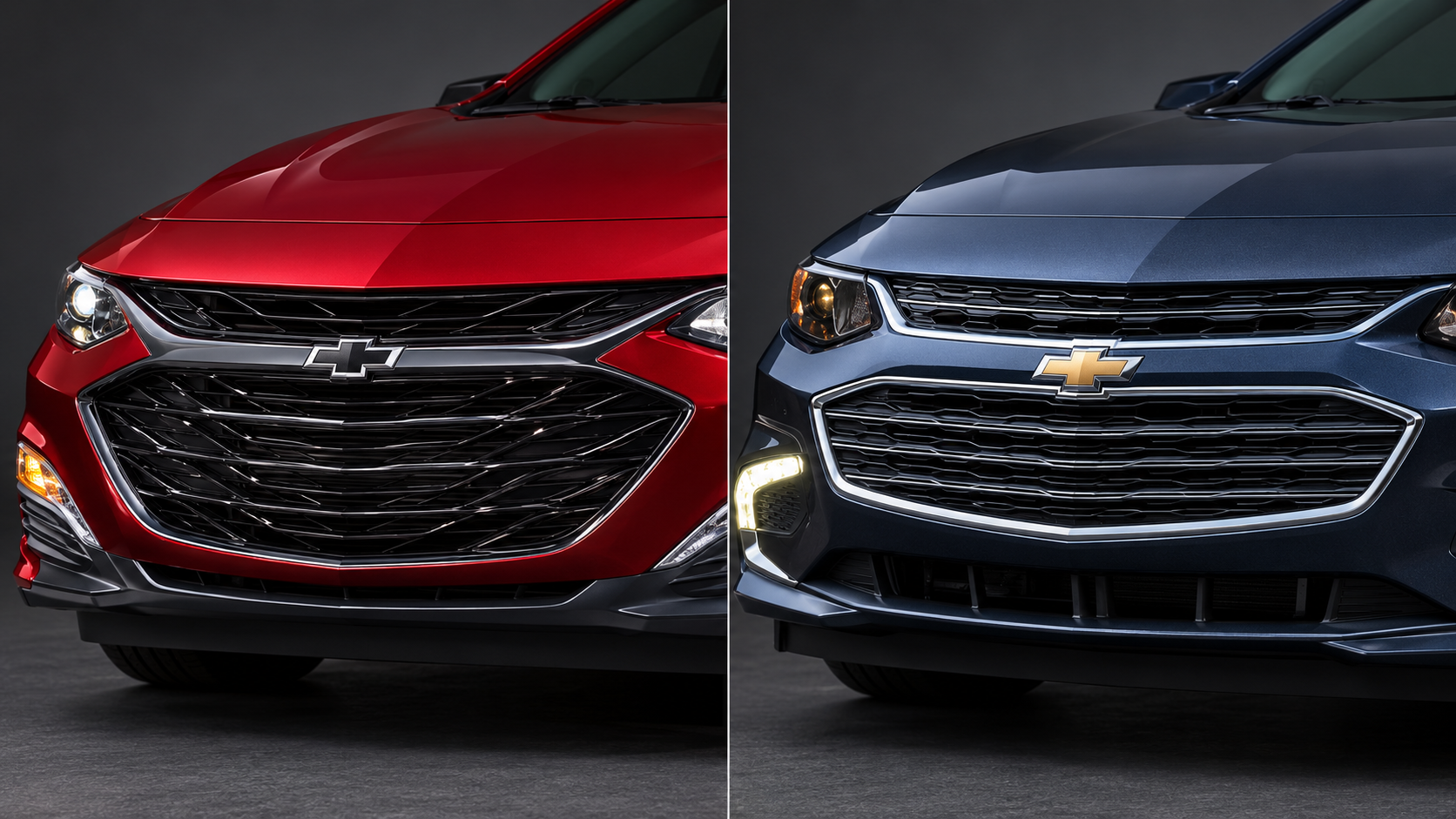
A “refresh” (also called a facelift or mid-cycle update) is industry jargon for updating an existing model without changing the entire vehicle. Common techniques include a revised grille or new headlight arrangement. The rear end may also get new styling. Inside, the manufacturer may introduce new upholstery, a reworked dashboard, or a larger touchscreen.
However, at its core, the basic design stays the same. The easiest way to tell is by looking at the car’s profile. The roofline and door structure usually remain unchanged, regardless of what happened to the front and back.
Keep in mind that a refresh may involve more than aesthetics. An automaker may introduce a new engine or transmission. It’s also not unusual to add new software (for infotainment and driver-assistance systems). These changes can be more meaningful to subsequent owners than a new bumper.
A redesign is often a fresh-from-the-ground-up overhaul that signals a new generation. In these situations, the nameplate just carries forward for marketing purposes. However, especially in today’s hyper-competitive car market, some manufacturers save money by keeping the previous generation’s powertrain, albeit with some updates. The biggest changes are to the body and cabin.
Should You Avoid the First Year of a Redesign?
You may have heard the advice: never buy the first year of a new or redesigned vehicle. The data backs it up. Across more than 3,000 model-year grades in the CarDependability Index (CDi), one in three all-new or redesigned vehicles graded D or F in its first year. That eye-opening statistic compares to one in nine for established model years.
There’s a reasonable argument for being cautious. In one example, CarDependability compared the 2017 Toyota Camry with the 2018 Toyota Camry. This is a case where buying the newer version may not be the best approach.
Later model years give the manufacturer time to identify problems and make corrections. Three out of four redesigns improve in their second year, when the typical car draws about a third fewer complaints than it did at launch. By year three, that’s down by nearly half. That’s why you should compare years within a generation, especially when a new engine or transmission is involved. The later years of the eighth-generation (2018–2024) Toyota Camry are among the highest-rated in Early CDi scoring.
Don’t necessarily rule out a first-year model; just do your homework. If complaints center around new systems (engines, transmissions, and driver-assist technologies), look at owner reports from more recent years to see if those first-year gremlins have been resolved.
Where Can You Find Better Value?
As mentioned above in the Camry scenario, opting for an older model with strong dependability ratings is usually the best way to save money on a used car. You’ll pass on styling and technology updates, but you may face fewer ownership headaches.
For example, the 2015 Honda CR-V received styling and powertrain updates as part of the model’s fourth generation. However, the 2013 CR-V is a better buy thanks to a higher Early CDi score (85/100, Grade: B) versus 69/100 (Grade: D+) for the 2015 edition.
Of course, this is a model year-wide ranking. Take a close look at what you’re buying. Take an extended test drive, get a vehicle history report, and have a trusted mechanic inspect the car.