
This article contains affiliate links. As an Amazon Associate, we earn from qualifying purchases.
A used car can look clean and drive smoothly yet still hide problems; and a few inexpensive car inspection tools help you find them before you buy. They won’t replace a professional inspection, but they can help you decide whether a car is worth that next step or whether you should walk away. The price ranges below cover basic consumer tools.
1. Digital Paint Depth Gauge
Approximate price: $50–$100
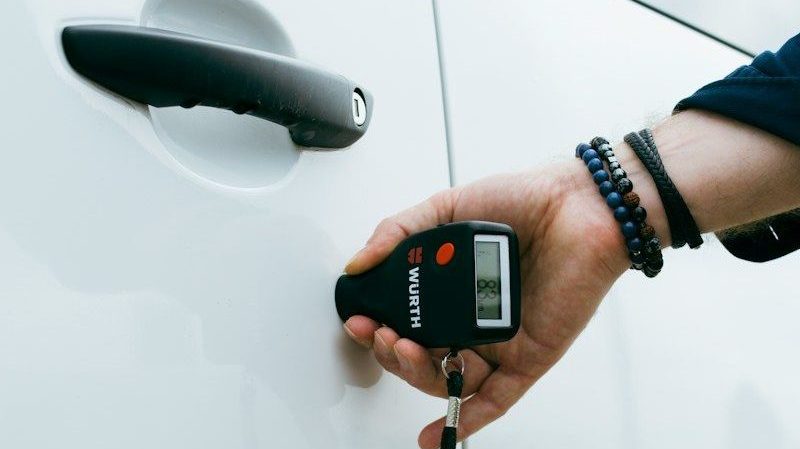
Repainting isn’t always obvious. A paint depth gauge measures coating thickness, helping identify areas that may have been refinished or repaired. Calibrate it according to the instructions, then take several readings across each panel. Substantially thicker readings in one area warrant questions about previous damage. Choose a gauge that works on steel and aluminum; ordinary metal-panel gauges won’t measure plastic bumpers. Repainting alone doesn’t prove a serious accident occurred.
2. OBD2 Code Scanner
Approximate price: $20–$50
Plug an OBD2 scanner into the diagnostic port, usually beneath the dashboard, and follow its instructions to read stored and pending trouble codes. These can flag problems even when the check-engine light is off. Also check emissions readiness status: incomplete checks can follow a battery disconnection or recently erased codes. Ask why. A code identifies a problem the computer detected, not necessarily the part that needs replacing. Don’t erase codes while inspecting someone else’s car.
3. LED Inspection Penlight
Approximate price: $20–$50
Even in daylight, engine compartments and wheel wells have dark corners. A slim penlight helps you spot wet areas around hoses, crusty deposits from leaks, damaged wiring, and rust along accessible body seams. Shine it beneath the engine and inside the trunk, too, looking for fluid stains or signs of water intrusion. Keep your hands clear of hot components and moving parts, and never crawl under a car supported only by a jack.
4. Tire Pressure and Tread Depth Gauges
Approximate price: $10–$25 for pressure; $10–$15 for tread depth
With a digital tire pressure gauge, check cold tire pressures against the driver’s door-jamb label. Correct pressures suggest routine maintenance, though they don’t prove the whole car was well cared for. Low readings warrant questions about leaks or neglect; proper inflation also supports handling, tire life, and fuel economy.
For tread, place the depth gauge’s probe in the main grooves, avoiding raised wear bars. Measure across and around each tire. Uneven wear can suggest alignment or suspension problems. Tires at 2/32 inch need replacement, adding to your purchase costs.
5. Digital Multimeter
Approximate price: $15–$35
Set the digital multimeter to DC voltage, with its leads in the proper voltage-testing sockets. Touch the red lead to the battery’s positive terminal and the black lead to the negative terminal. A fully charged conventional battery should read around 12.6 volts after resting with the engine off. With the engine running, roughly 13.5–14.5 volts is a common charging range for the alternator. Modern charging systems vary, so check vehicle specifications before assuming a fault. These readings provide clues, but they don’t replace a battery load test.
Getting the Most from Your Car Inspection Tools
None of these car inspection tools replace a professional pre-purchase inspection, but together they help you decide whether a used car is worth that next step, or worth walking away from. Keep a few in your glovebox so you’re ready to check any vehicle on the spot.
More: 35-Point Checklist: How to Inspect a Used Car Before You Buy